
Backcountry Odyssey
Photos & reflections from a recent adventure.

Last week I took a long drive. Let me tell you about it.
Better yet, let me show you.
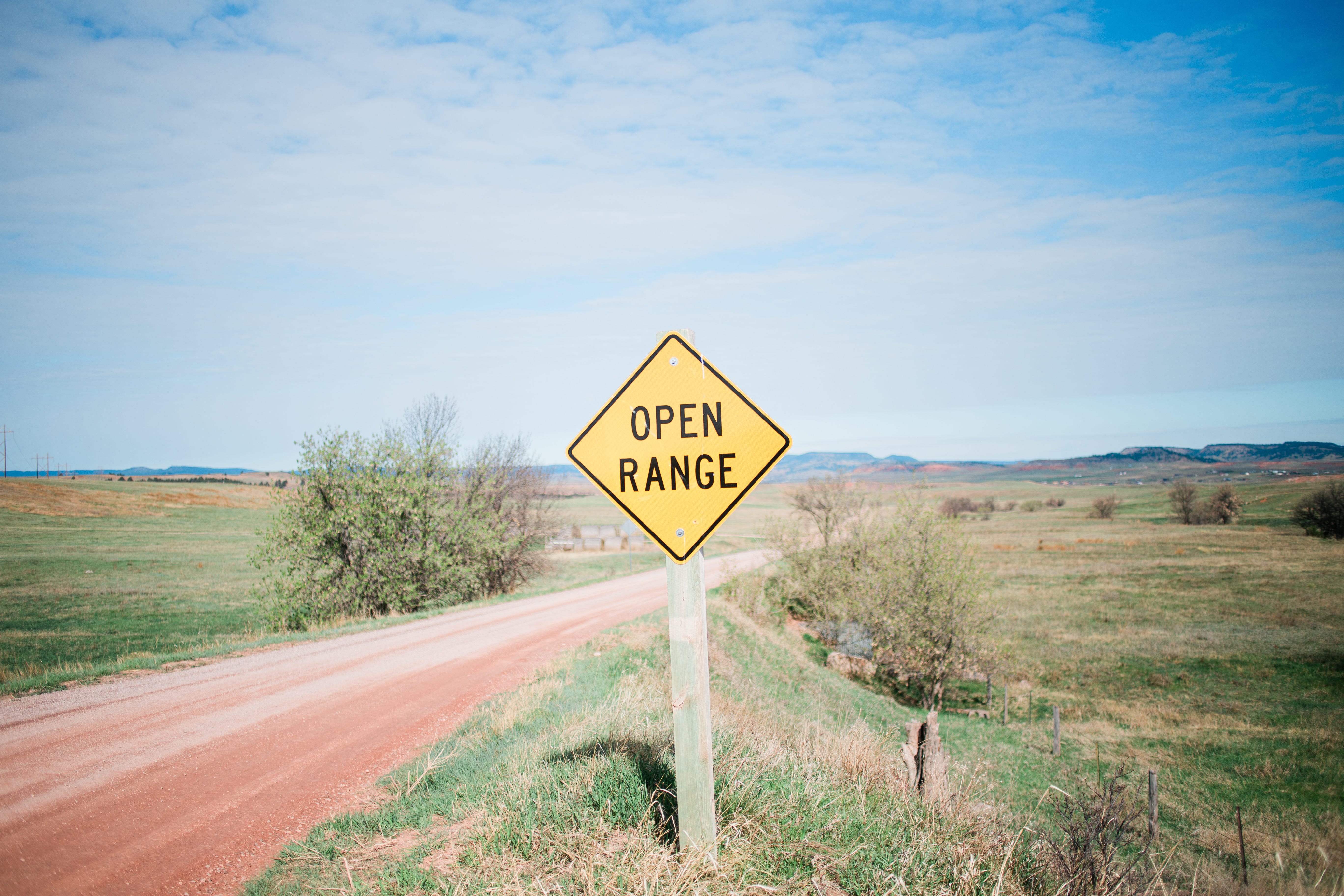
The rest of my family had plans in Florida, so I packed my Jeep and drove west for a few days. Per usual, my final destination was the Black Hills, but I decided to take a different route this time, to see some new country. I even drew up a map.
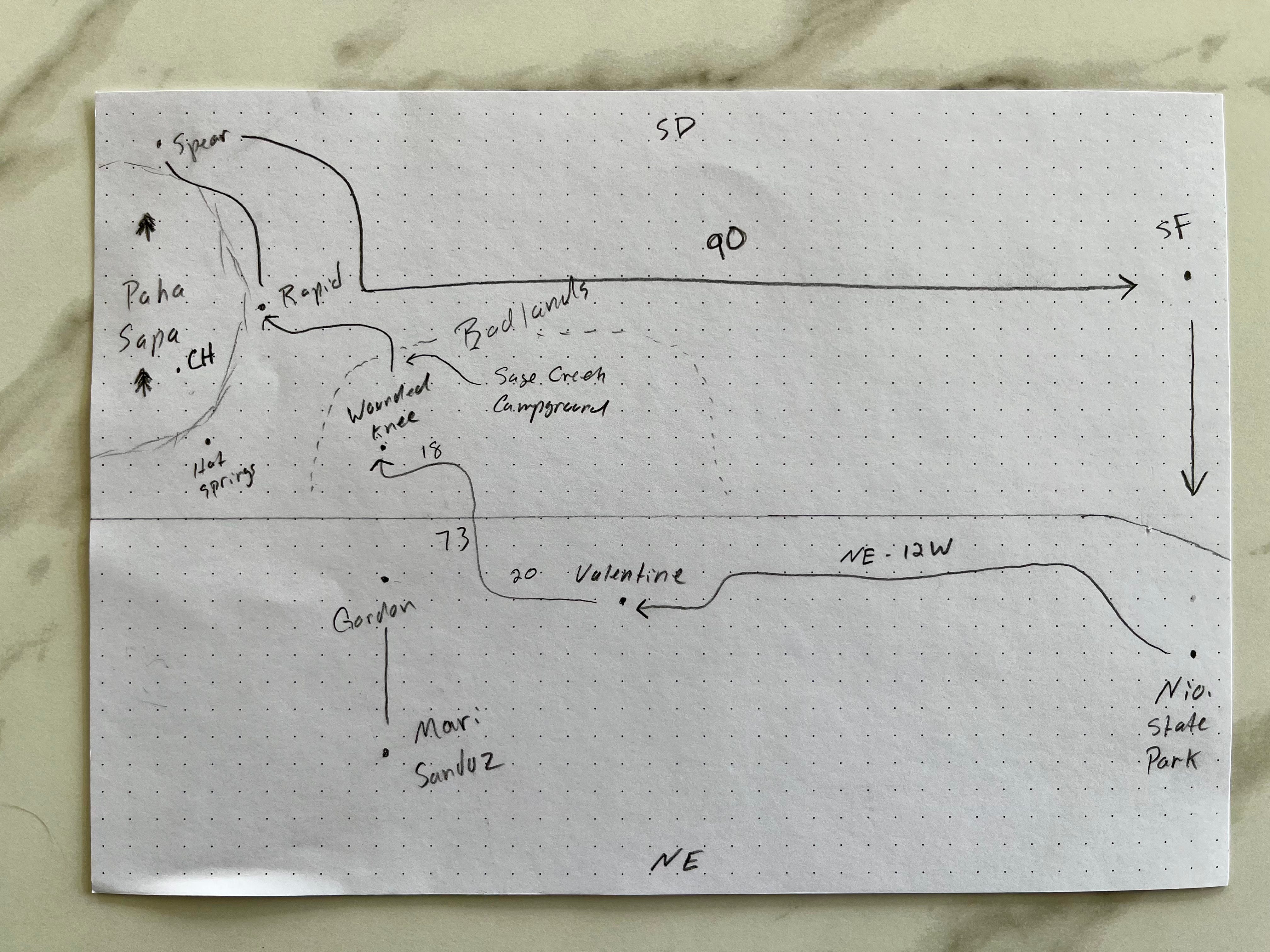
Instead of driving straight west across South Dakota on I-90, I chose to loop down through the Nebraska Sandhills, up into the rugged southern unit of the Badlands, and then on into the ponderosa pine forests of Paha Sapa.
My first stop was Niobrara State Park, which sits at the confluence of the Missouri and Niobrara rivers. The region is gorgeous, expansive, lush—teeming with cranes, geese, bald eagles, red-tailed hawks, nighthawks, double-crested cormorants, mallards, meadowlarks and swallows. And, of course, eastern red cedar.

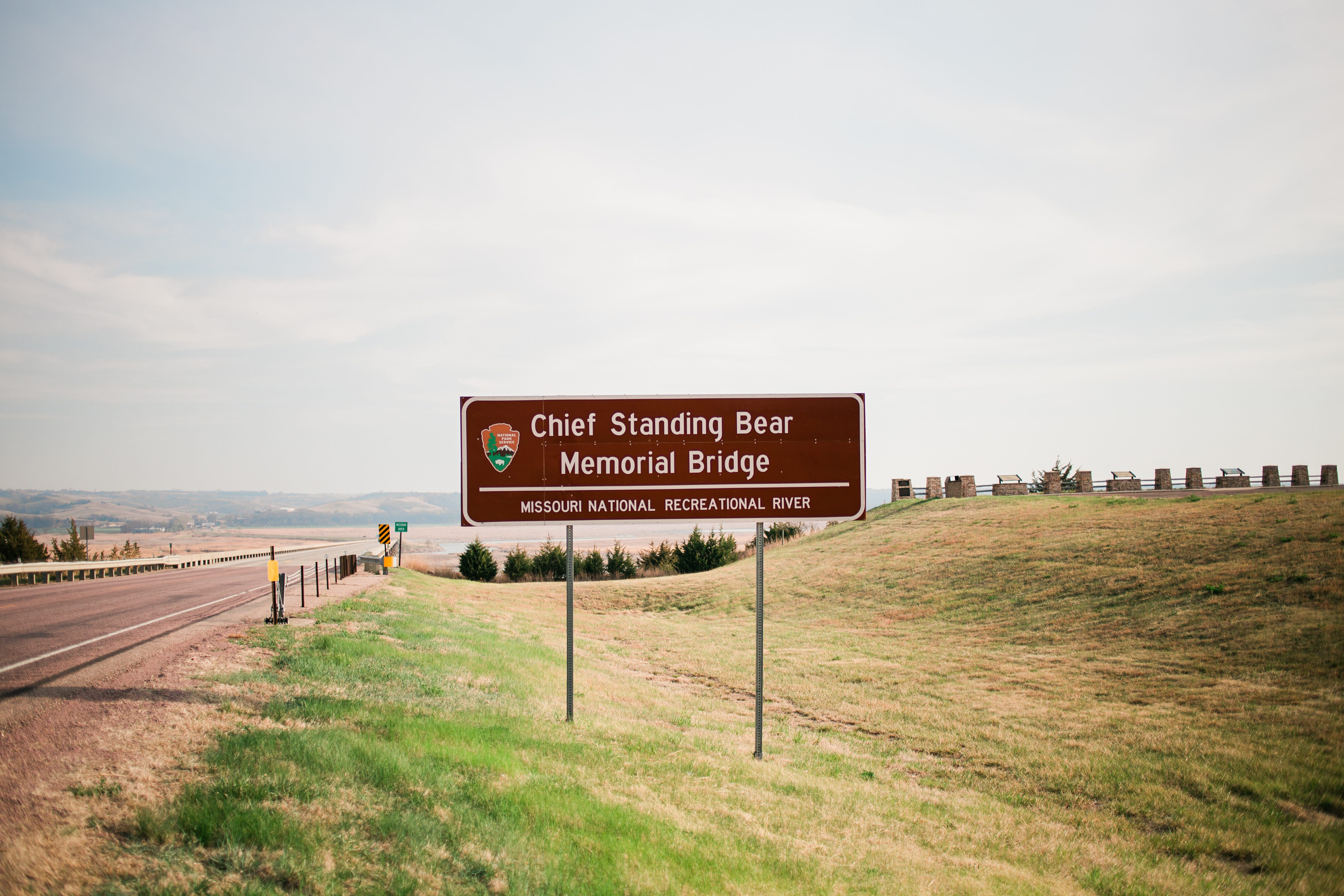
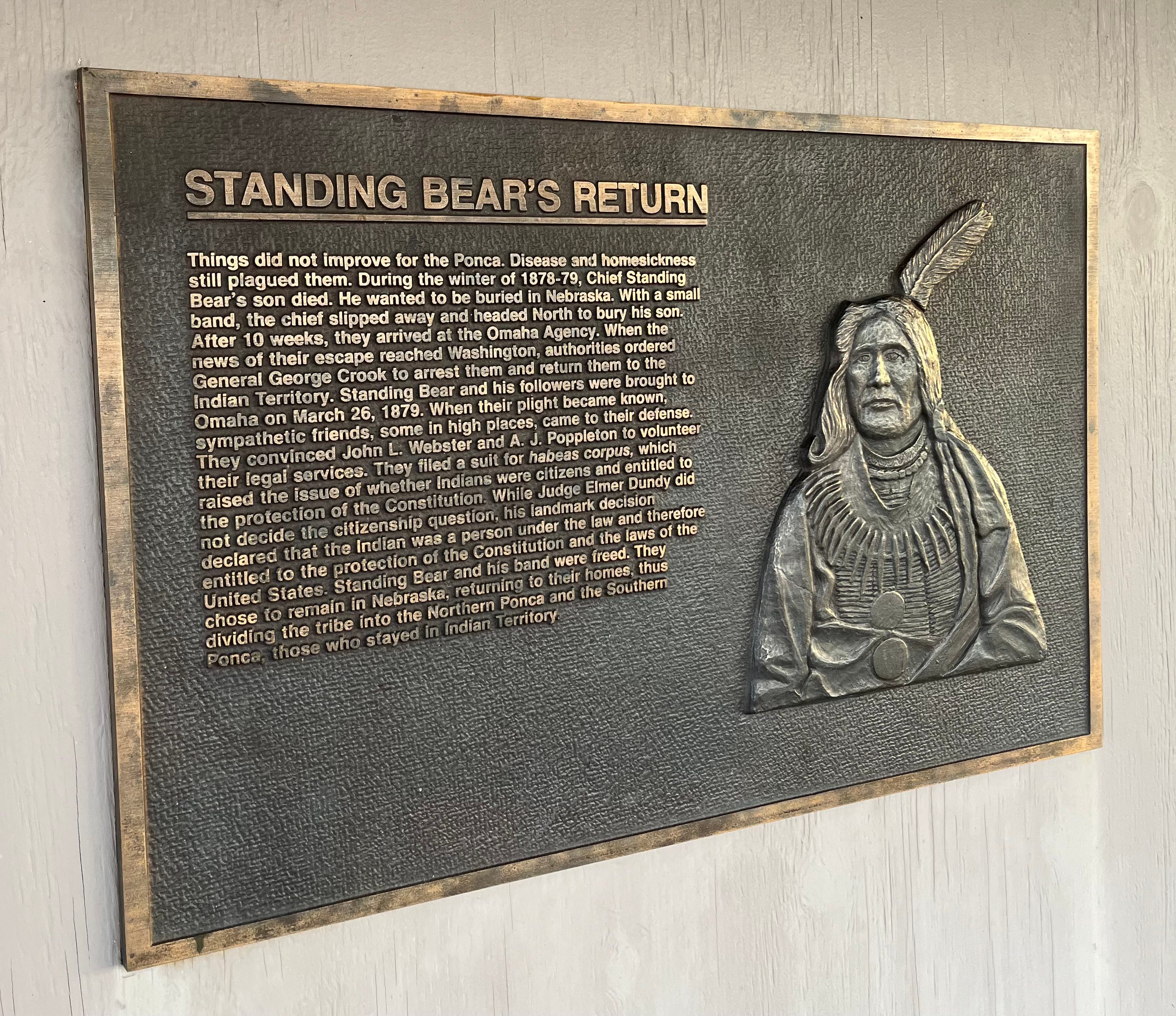
Spanning the Missouri, the Chief Standing Bear Memorial Bridge opened in 1998 to commemorate the famous Ponca leader. Standing Bear is best known for his participation in the first U.S. court ruling to recognize Native Americans as “persons” under the law, Standing Bear v. Crook, in 1879.
The Ponca have lived around the mouth of the Niobrara since at least the mid-1700s. They are often described as a docile people, and they didn’t give much of a fight when the U.S. government coerced them to relinquish all their homelands in the 1850s, all but a small reservation along the river. Then, in some bureaucratic oversight, even this land was erroneously handed over to the Sioux by the Fed in the 1868 Treaty of Fort Laramie.
The Ponca were defenseless against raids from the combative Lakota. Eventually they were simply ordered to relocate to “Indian Country” in present-day Oklahoma. The Ponca complied but balked at the squalid living conditions of the new reservation, and nearly one-third of the tribe died as a result of the exodus, including Standing Bear’s son Bear Shield.
Unauthorized, Standing Bear and a band of Ponca made the arduous trip back to Nebraska to bury Bear Shield. The party was eventually tracked down, arrested, and detained at Fort Omaha—a turn of events that ultimately worked in the Ponca’s favor.
For it was here that a journalist named Thomas Henry Tibbles heard of Standing Bear and published a sympathetic account of the Ponca’s plight in the Omaha Daily Herald. This story made its way to lawyers John L. Webster and Andrew J. Poppleton, who helped Standing Bear file a suit for habeas corpus, resulting, ultimately, in the landmark decision regarding Indian personhood under the Constitution.
“[My] hand is not the color of yours,” declared Standing Bear during his moving courtroom speech, “but if I pierce it, I shall feel pain. If you pierce your hand, you also feel pain. The blood that will flow from mine will be of the same color as yours. I am a man. The same God made us both.”
Judge Elmer S. Dundy ruled that the Ponca—legal persons though not yet citizens—were being unjustly detained; therefore, Chief Standing Bear and his people were set free. Many returned to the Niobrara.
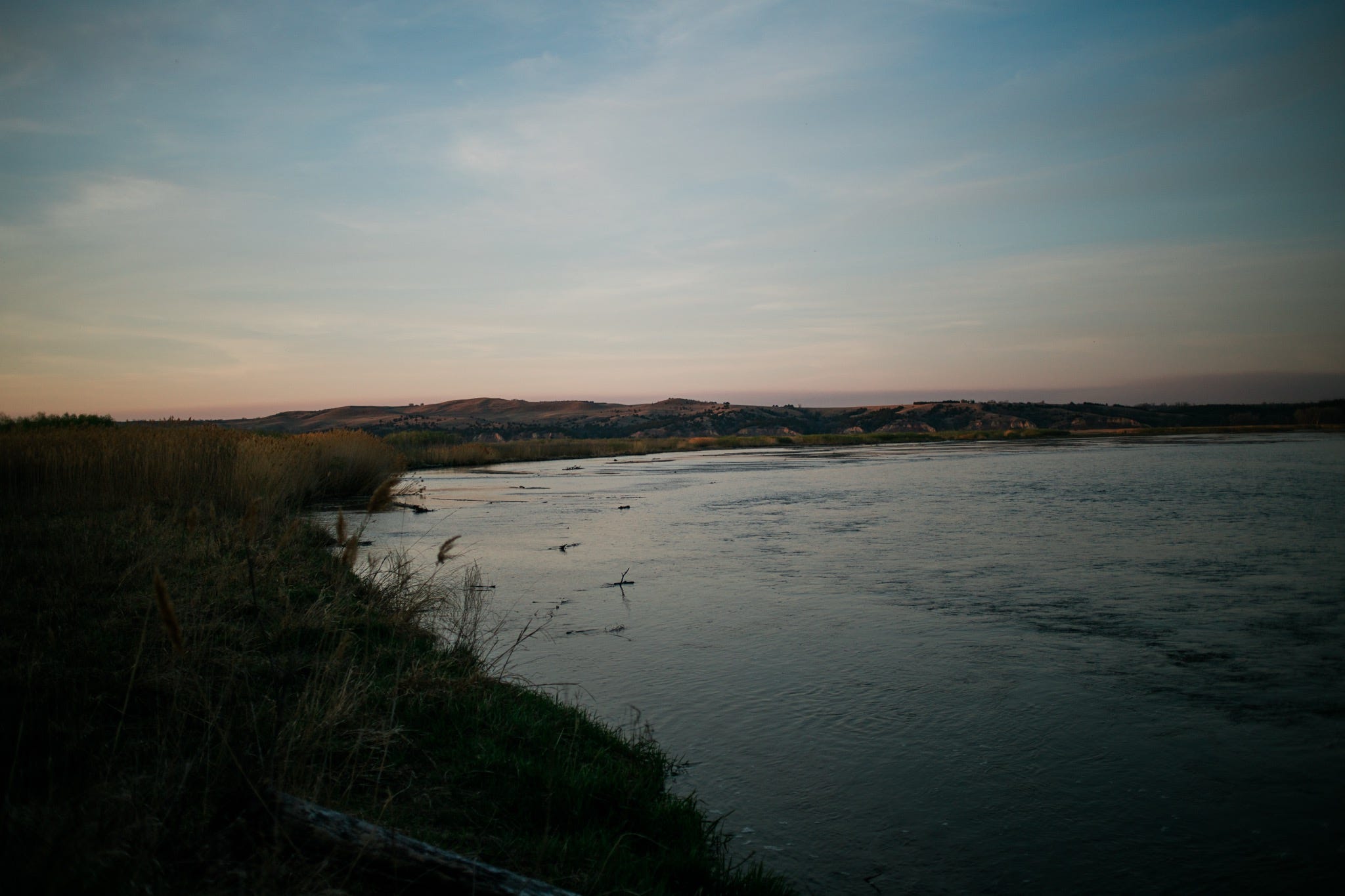
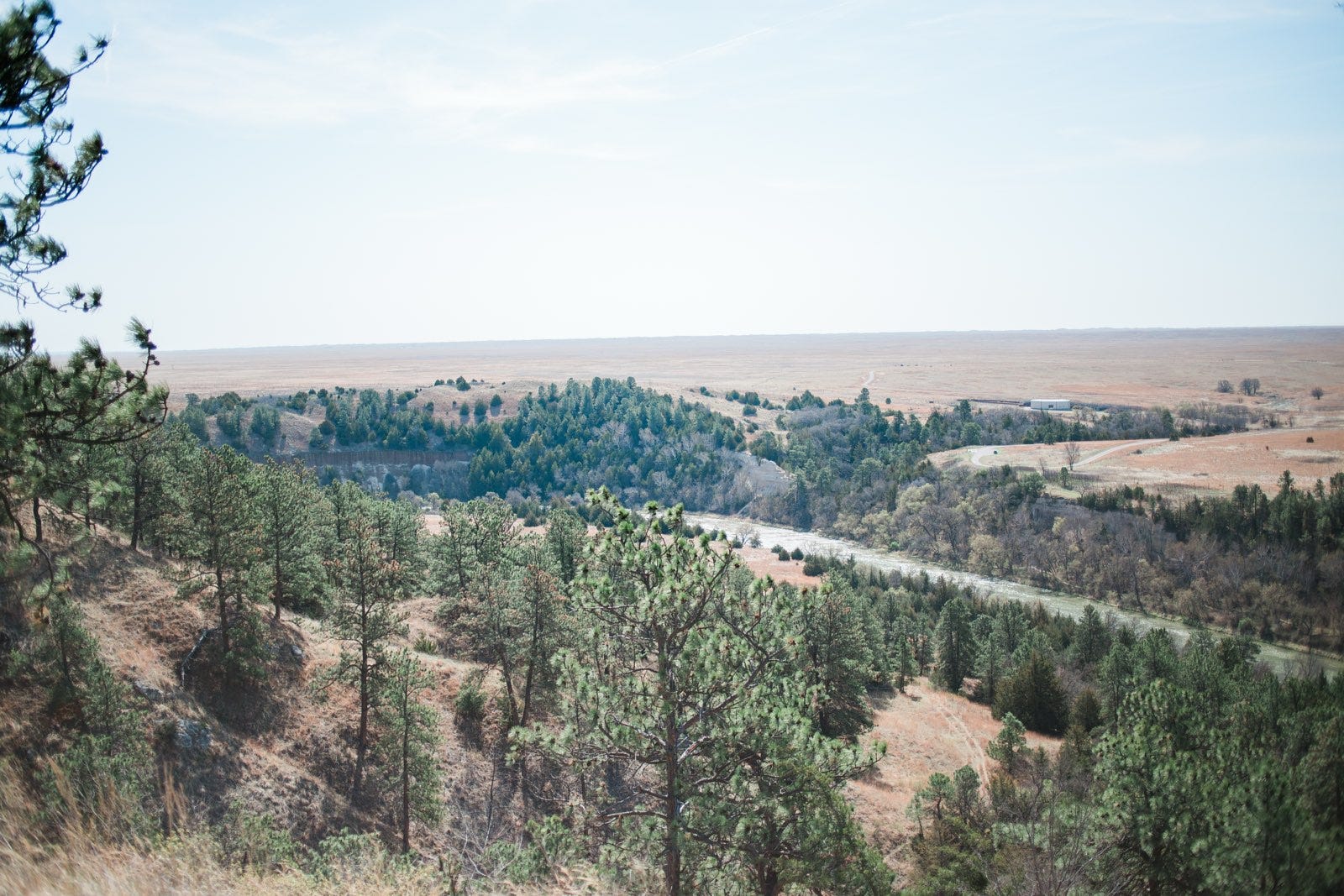
Next morning I took NE-12 west to Valentine, a route Jim Harrison once described as “good for what ails you.” He was right about that.
Along the way I passed through the smallest incorporated town in the United States, Monowi, Nebraska, population: 1. Apparently Monowi is held down entirely by 90-year-old Elsie Eiler, who serves as mayor, librarian, bartender, clerk, and treasurer. Per Wikipedia:
During the 2000 census, the village recorded a total population of two, consisting of a married couple, Rudy and Elsie Eiler. Rudy died in 2004, leaving his wife as the village’s sole resident. In this role, she serves as mayor and issued herself a liquor license. She is also required to submit an annual municipal road plan to maintain state funding for the village’s four streetlights.
Although the village is nearly abandoned, it does have a bar called the Monowi Tavern, operated by Eiler for passing travelers and tourists. She also maintains Rudy’s Library, a collection of approximately 5,000 volumes established in memory of her late husband.

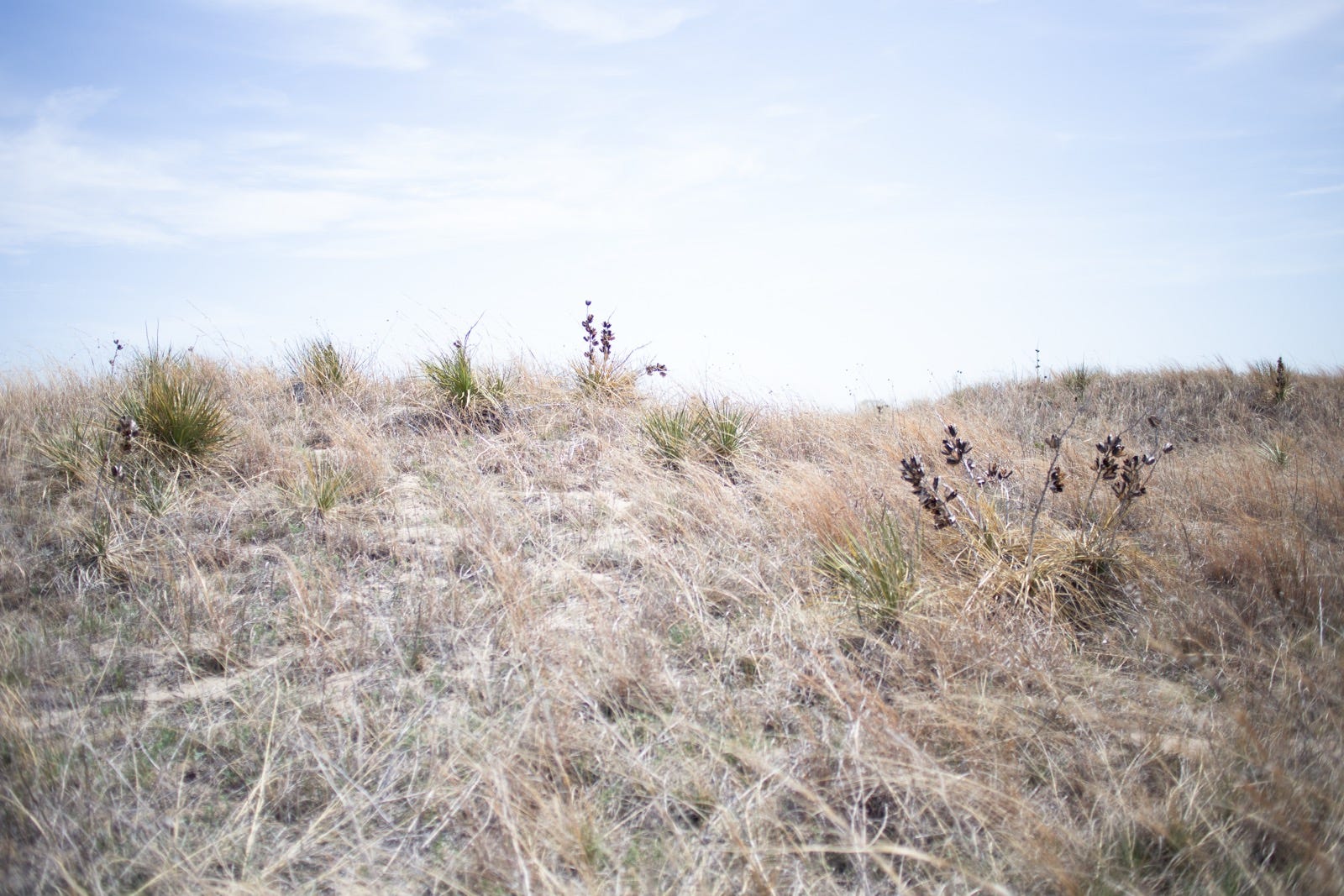
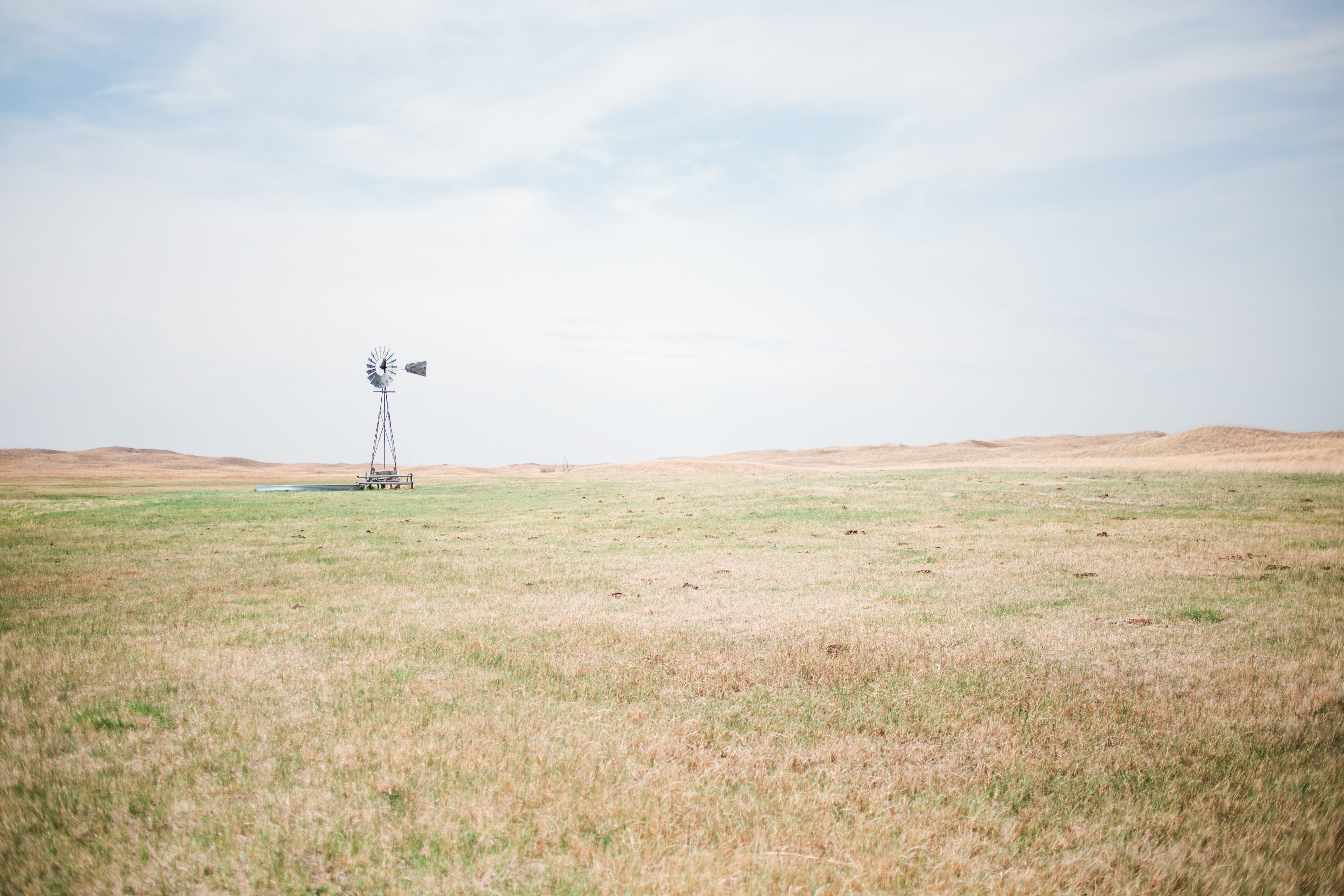
Growing up in Nebraska, I used to venture into the Sandhills with my family to fish or tube the Niobrara in the summers. On the surface, the region can appear like a desert; in fact, the dunes rest atop the vast Ogallala Aquifer and contain over 1 million acres of wetlands, streams, and lakes, forming the largest intact grassland in the Western Hemisphere.
The dunes resist farming but suit grazing, of both the bovine and human variety. Passing through the Valentine National Wildlife Refuge, hot winds howling outside, the word elysian kept coming to mind.1
Eventually I crossed the border and made my way to the Pine Ridge Reservation of the Oglala Lakota people.
My purpose was to visit a few gravesites on the reservation. I’d almost forgotten that Pine Ridge remains one of the poorest places in the country, suffering consistently high rates of unemployment, alcoholism, and crime. Infrastructure struggles. Stray dogs roam the sidewalks, where there are sidewalks.
At one point I passed what I honestly mistook for a junkyard—until I noticed the man sitting in a folding chair in the midst of the heap. It was just his yard.
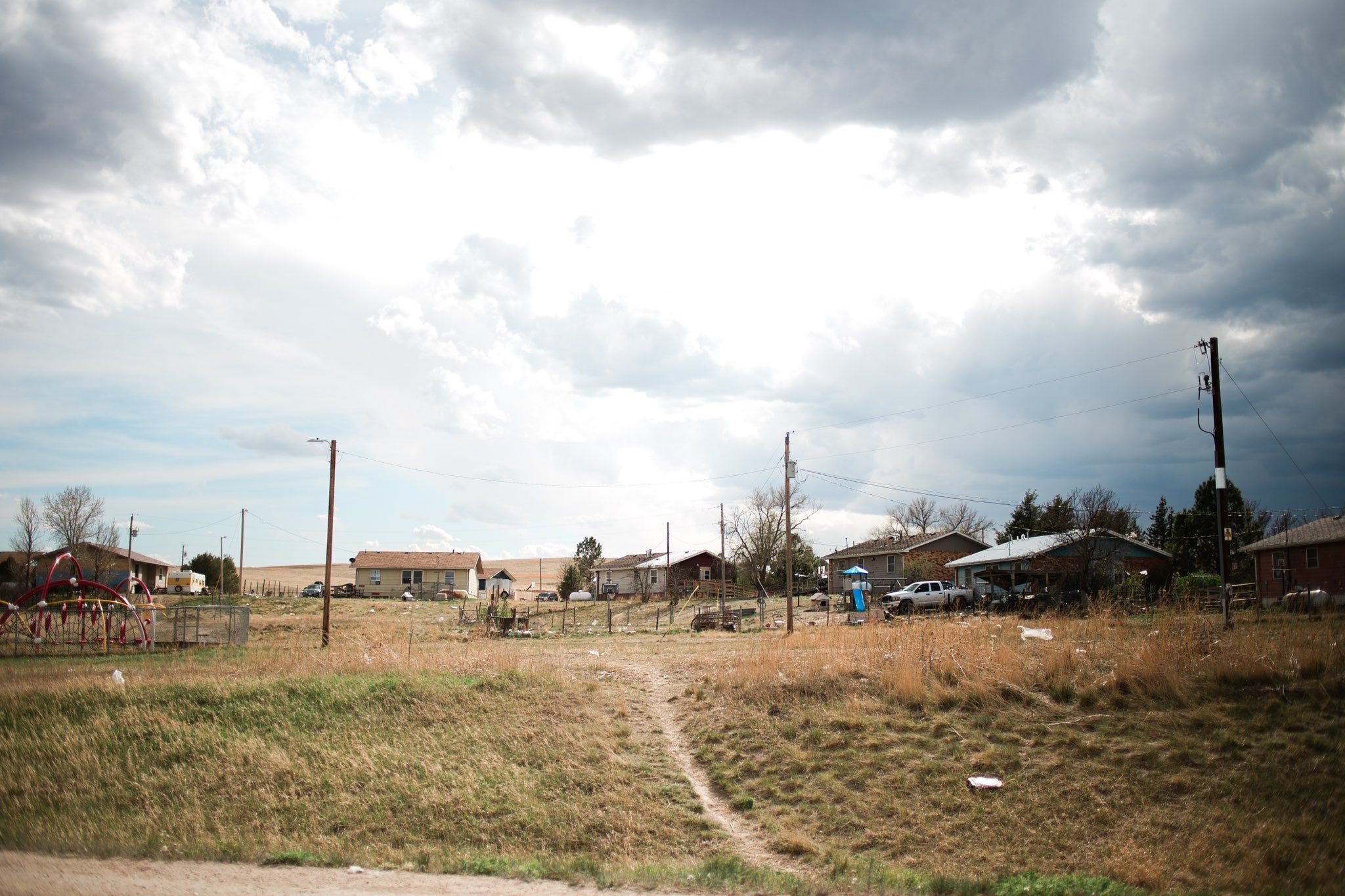
Of course the Lakota people have a thorny history in/with the U.S., to put it gently. Less than 150 years ago these were the equestrian lords of the high plains, a sovereign nation of warriors, bison hunters, and holy men. What happened?
History happened, I guess. Greed, lust, fear, betrayal, social Darwinianism, misunderstanding, mistranslation, violence, violence, violence. You could say the Lakota were colonized by Anglo-Americans, which is partially true. You could say the Lakota refused to get with modernity, which is also partially true. You could say much more besides.
It would be an oversimplification to view Pine Ridge as the logical conclusion of some historical narrative which casts the Lakota as passive victims of European expansion. And yet, driving the reservation’s tumbledown neighborhoods, one cannot ignore the specter of the not-so-distant past.
(Leaving Valentine, I heard a radio ad for an upcoming tribal celebration of the 150th anniversary of the Battle of the Little Bighorn this summer. "The past is never dead,” wrote Faulkner. “It's not even past.”)
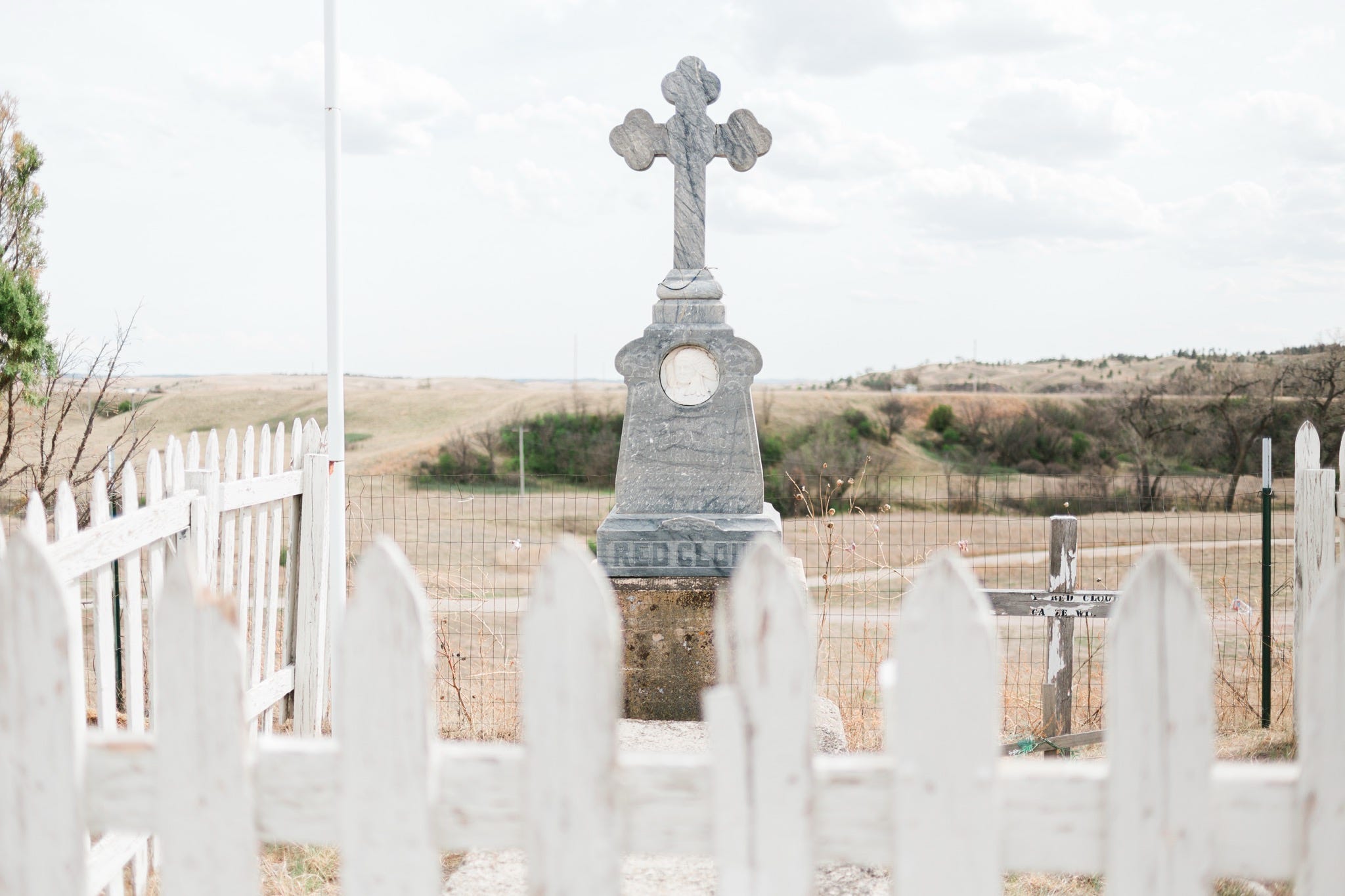
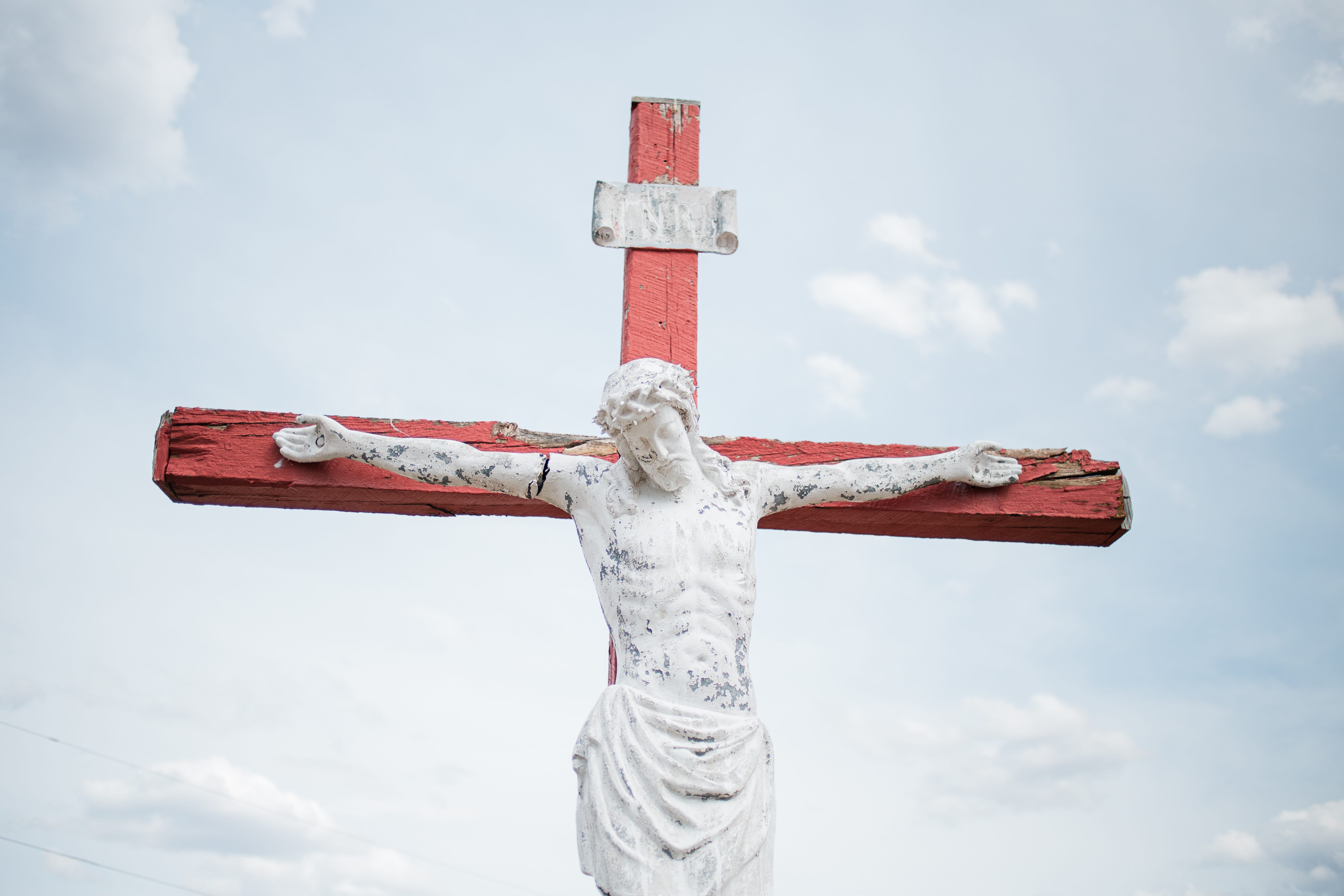
I parked my Jeep outside Holy Rosary Church and waited for a group of dark-haired girls to walk by and got out and started up the hill toward the graveyard. Through the gates, I made my way to the tall cross monument behind a chipped white-picket fence in the back corner. Dead grass and sunflower stalks hissed in the wind. Smears of cloud smeared an egg-blue sky. A life-size statue of Christ, hanging on a splintered red cross, peered down at me—or us.
“RED CLOUD”
Red Cloud was one of the early Oglala chiefs to surrender to the U.S. government. Although he’d made a name for himself in battle—and even has an entire war named after him—Red Cloud finally faced up to the impossible odds of resisting white settlement and accepted life on a reservation, Pine Ridge. For all this he is remembered as something of a moderate, a realist. Red Cloud was also baptized into the Catholic Church in 1884.
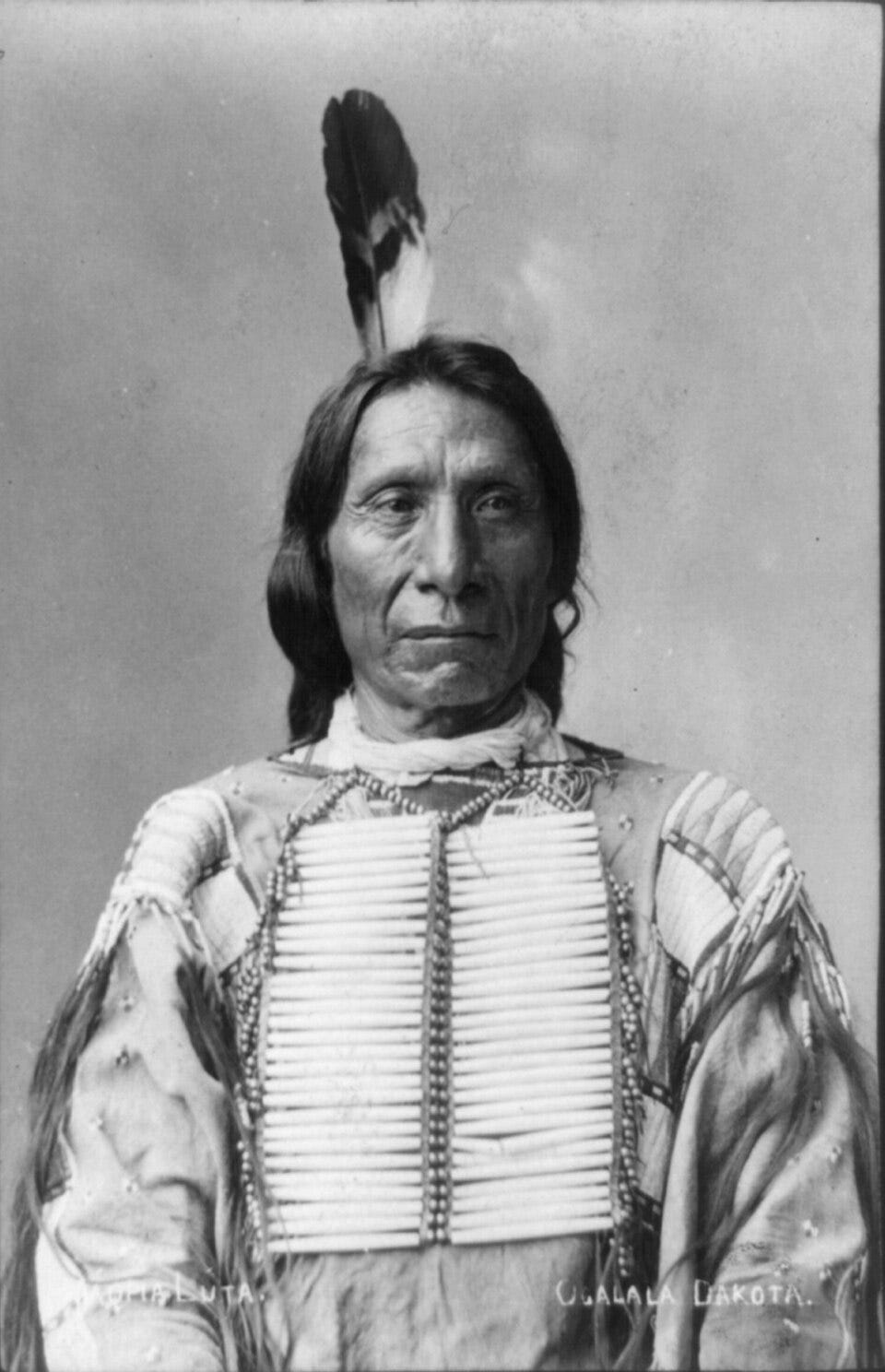
Roman Catholic and Episcopal missionaries were very active among the Lakota in the 19th century. (I’ve heard that the majority of all baptized members in the Episcopal Diocese of South Dakota today are Native American.) Some historians argue that conversion to Christianity was little more than a survival tactic for Sioux who had capitulated to white ways. I don’t doubt this was sometimes the case, or that some Lakota received baptism without proper catechesis.
I do not believe, however, that these conversions were in every case spiritually disingenuous. That would be presumptuous of me. Besides, we have numerous examples of Lakota who seemed to take their newfound faith quite seriously.
Black Elk, for instance.
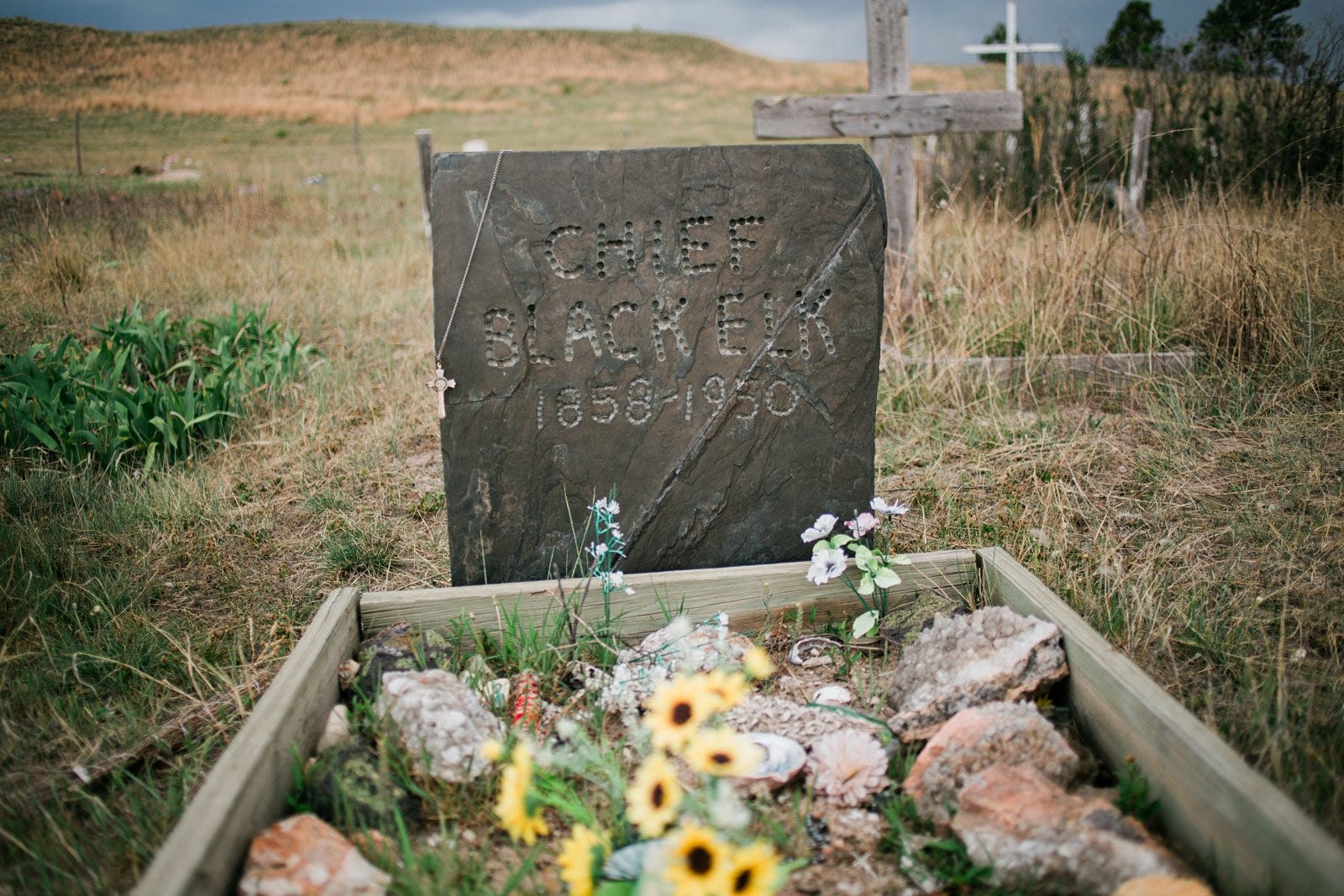
A noted Oglala Lakota holy man, Nicholas Black Elk not only received Christian baptism in 1904; he also became a catechist for the Church, serving his local parish and instructing others in the faith. Black Elk Speaks, the acclaimed account of his early life, ends with the Wounded Knee massacre of 1890, at which Black Elk was present; however, that book reveals precious little of his life and work in the 20th century. And Black Elk saw plenty of the 20th century—just look at the headstone.
Perhaps parish ministry in the hinterlands of Pine Ridge is less enchanting to a general public than our stereotypical pictures of 19th-century Plains Indian life. Black Elk is remembered as many things: mystic, prophet, medicine man, holy fool, missionary, catechist. Standing there, I was struck by the juxtaposition of his many reputations and his humble gravesite, notched on a nondescript hillside behind a couple trailer homes.
The Lakota have long viewed the Black Hills as the center of the earth. But Black Elk added that every individual may be regarded the spiritual center of the earth:
The first peace, which is the most important, is that which comes within the souls of people when they realize their relationship, their oneness, with the universe and all its powers, and when they realize that at the center of the universe dwells Wakan-Tanka, and that this center is really everywhere, it is within each of us.2
Hinterlands? I take it back. Black Elk rests in the heart of all that is.
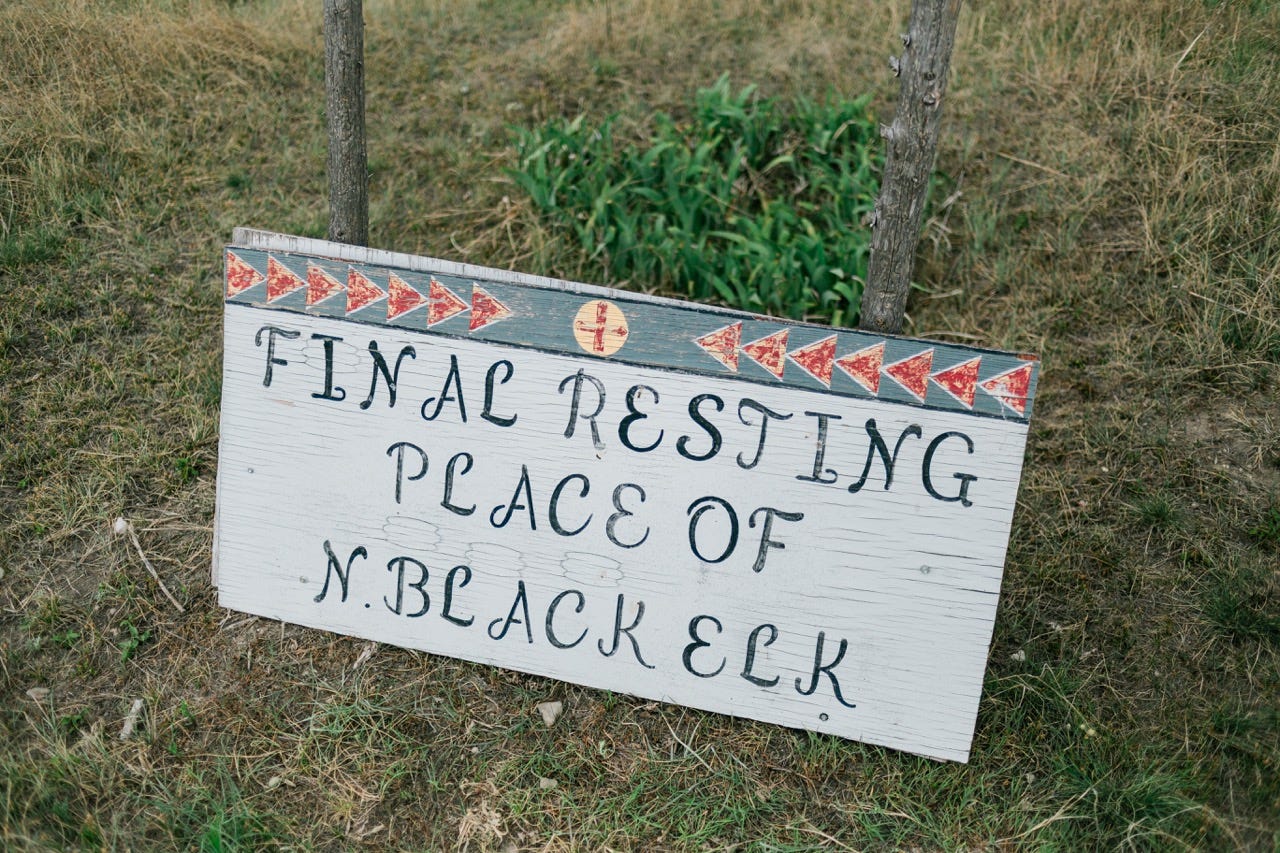
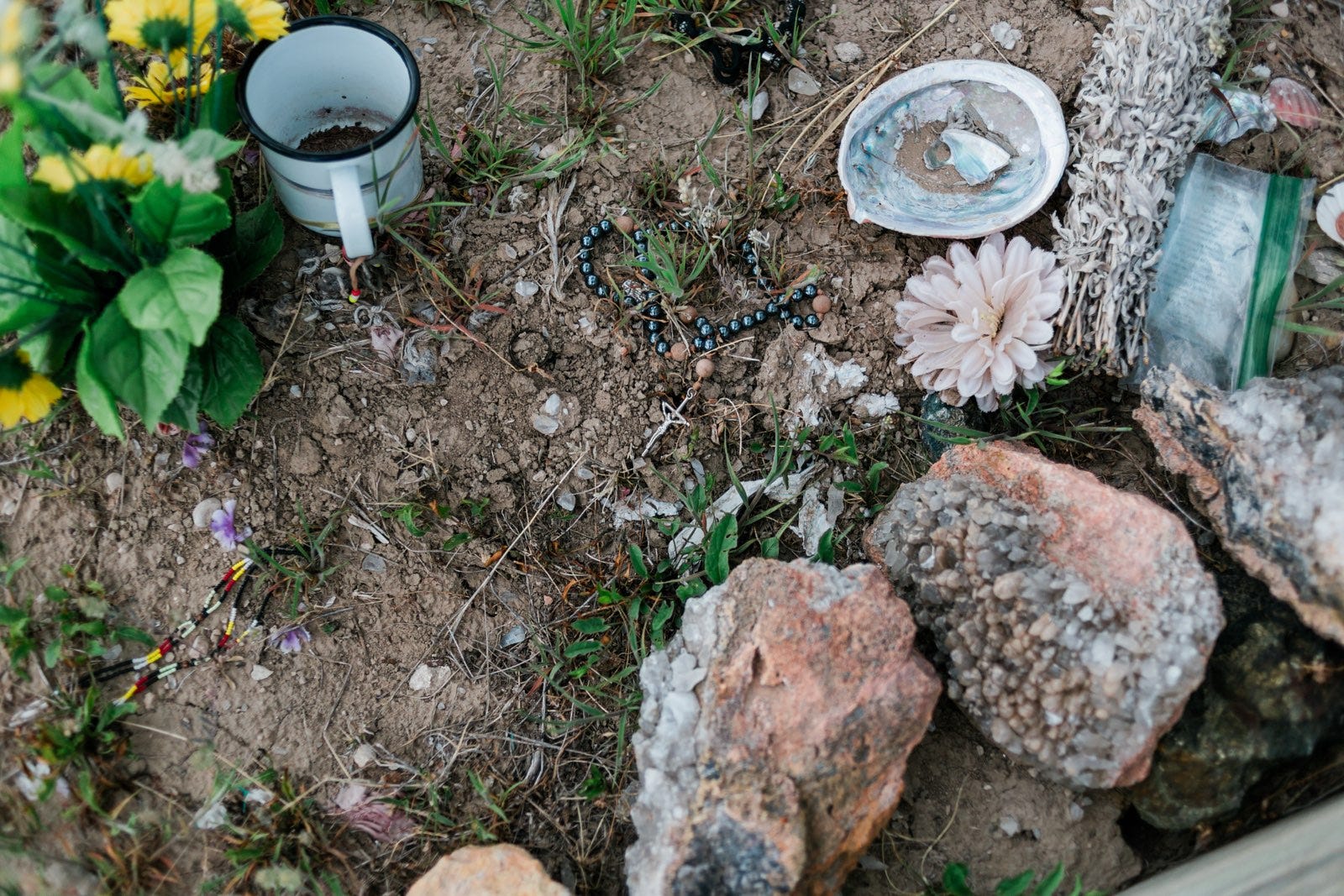
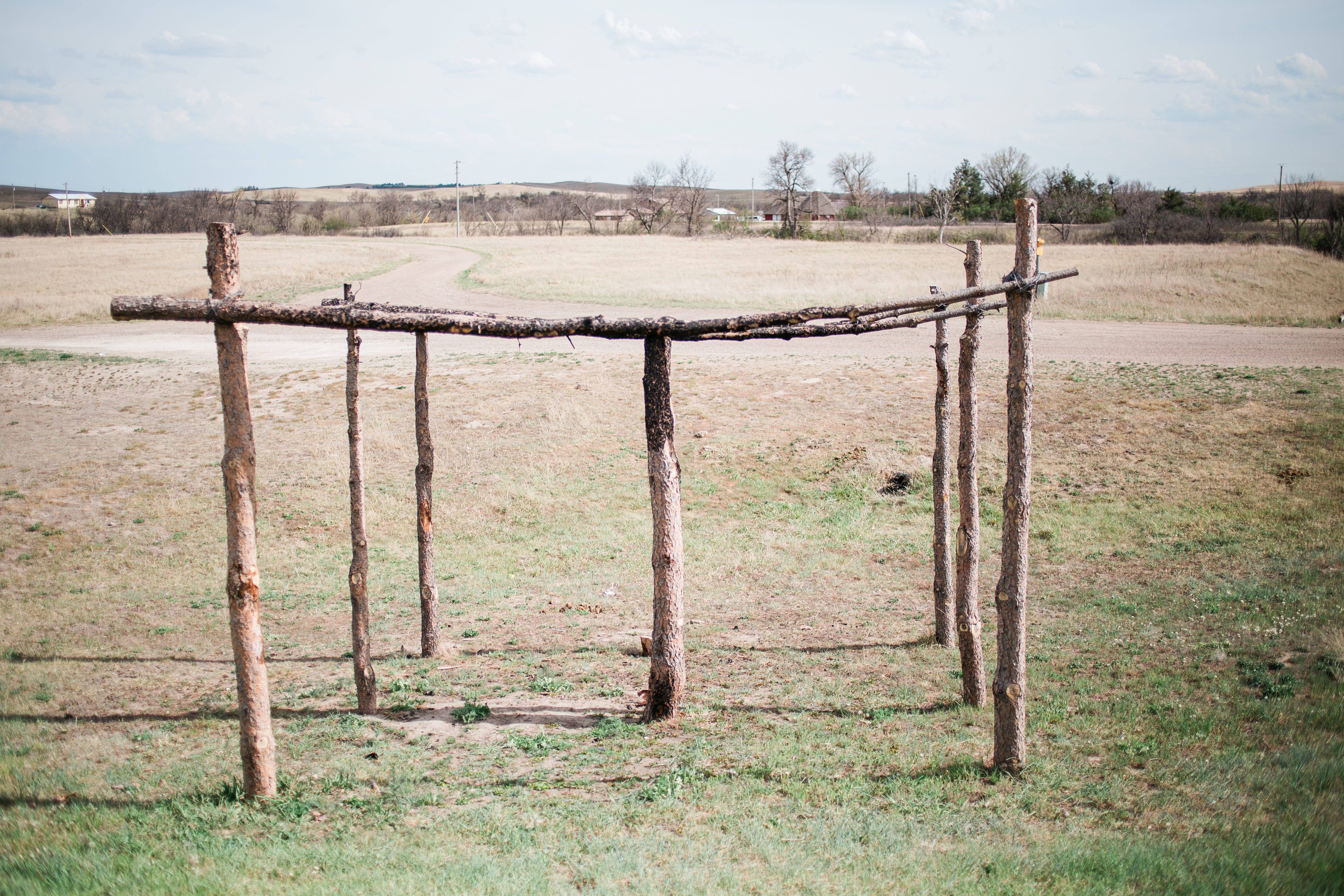
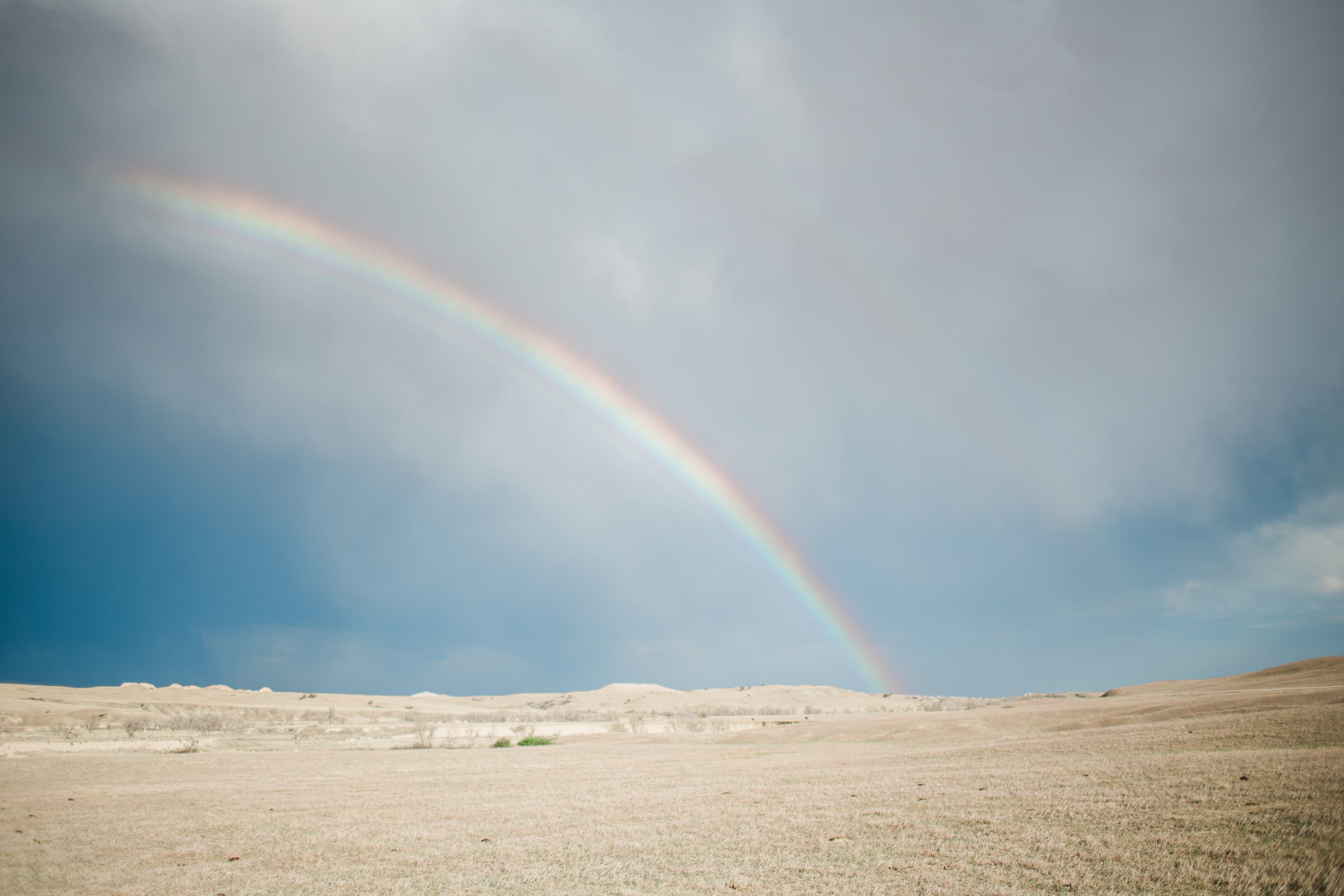
A pulverizing storm broke as soon as I left the cemetery. I hurtled through the southern unit of the Badlands toward my next campsite, dreading the thought of pitching a tent in 40mph winds.
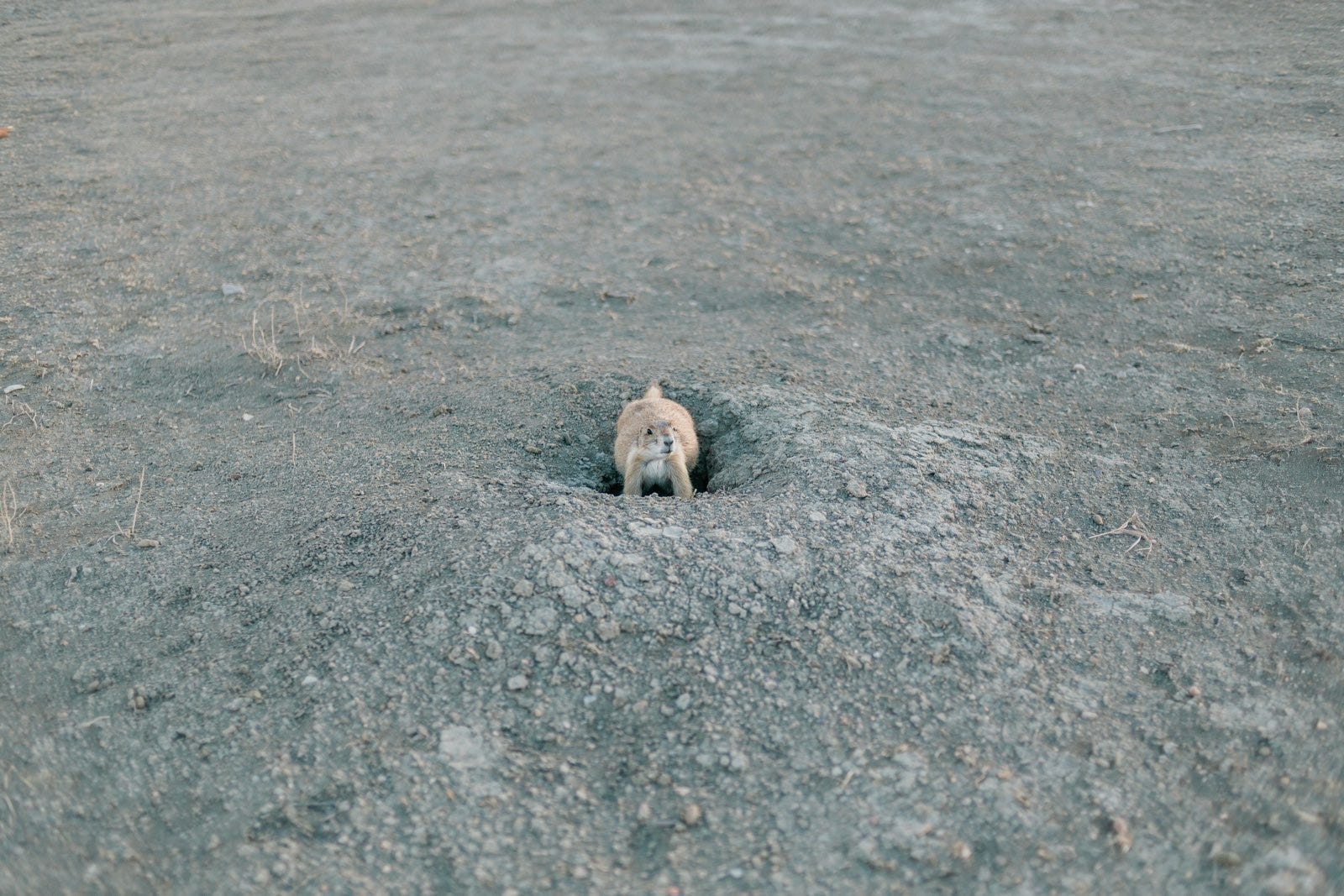
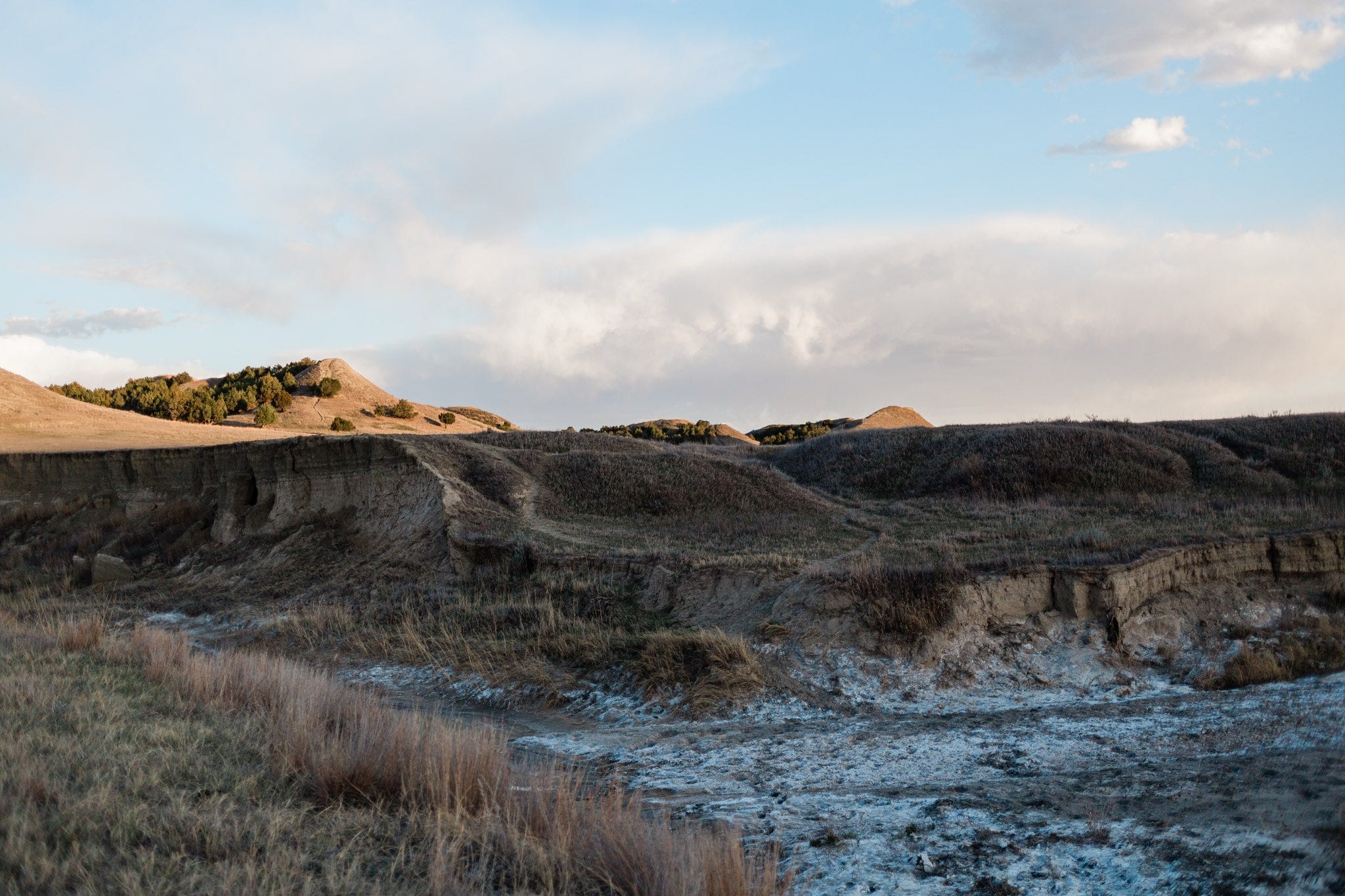
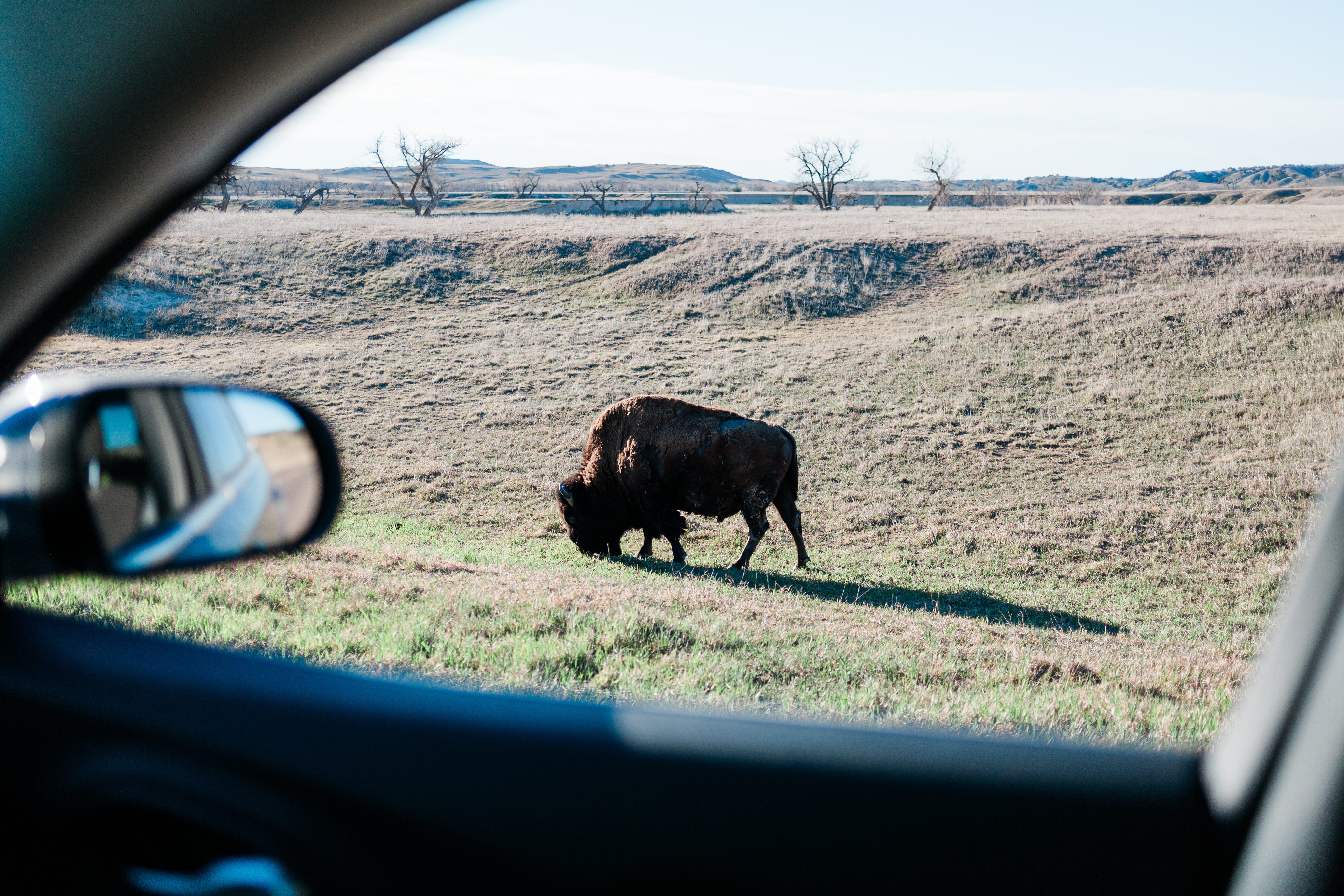
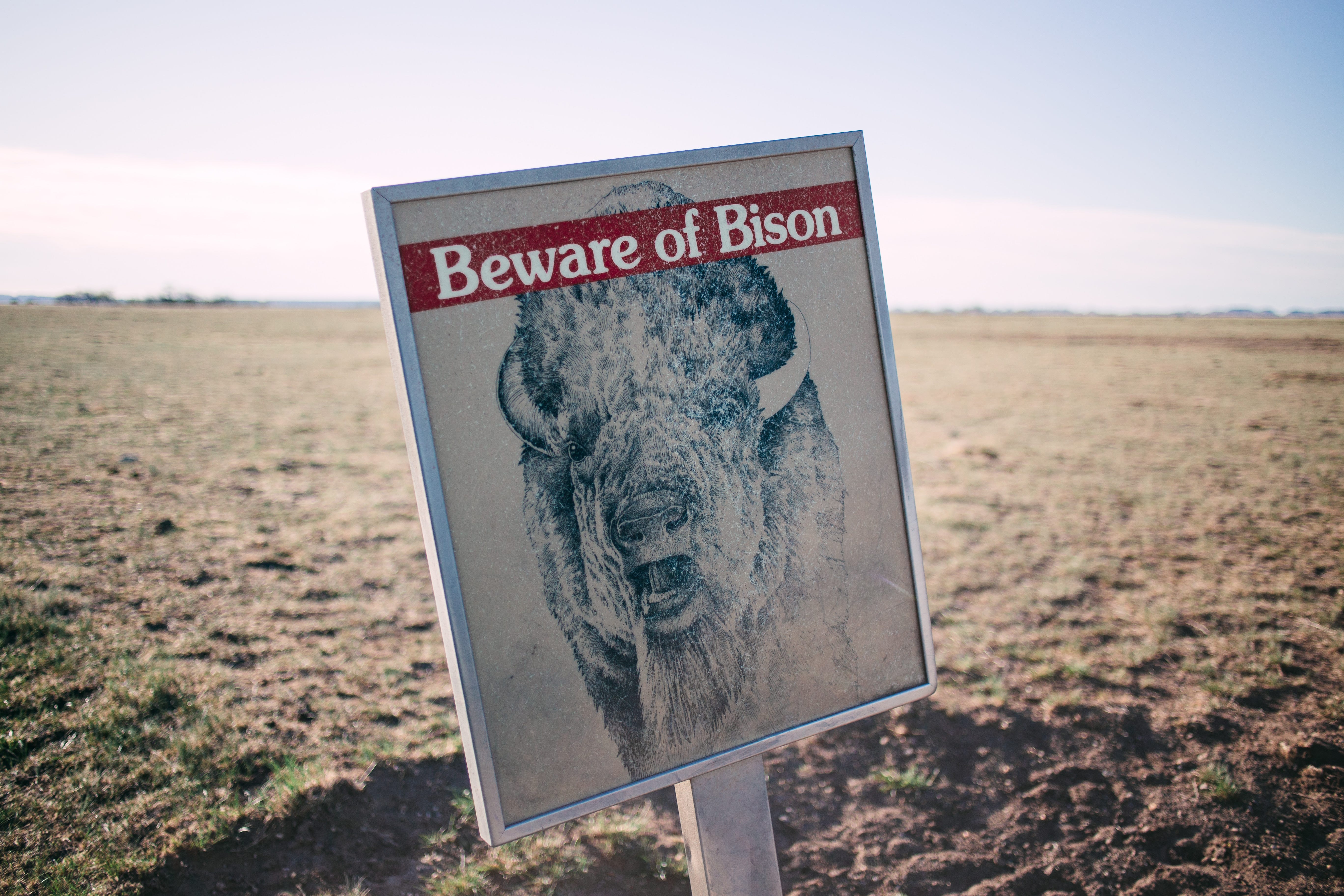
Happily, the rain abated just as I pulled into the campsite, and I enjoyed a calm evening at Sage Creek among prairie dogs and several grazing bison.

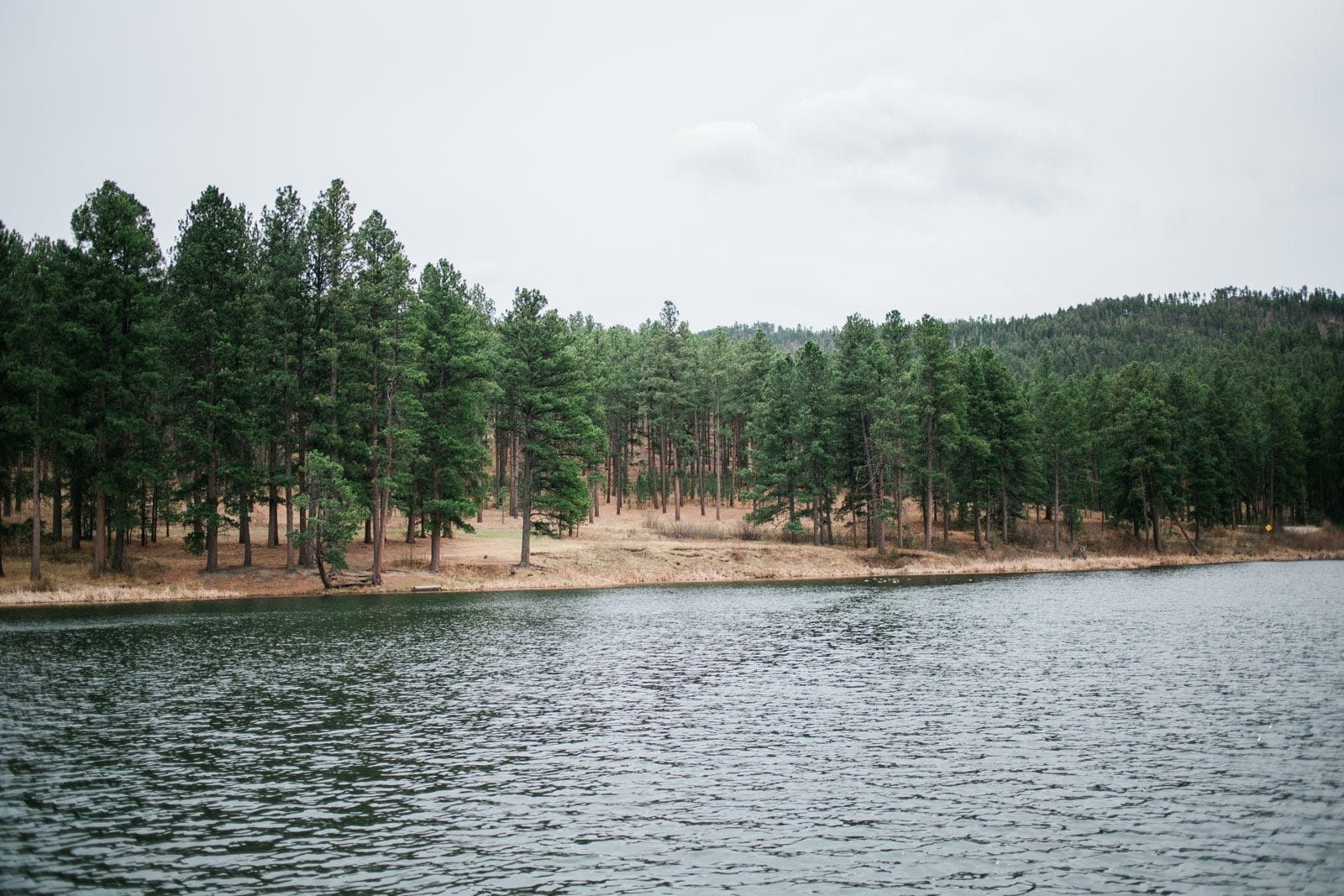
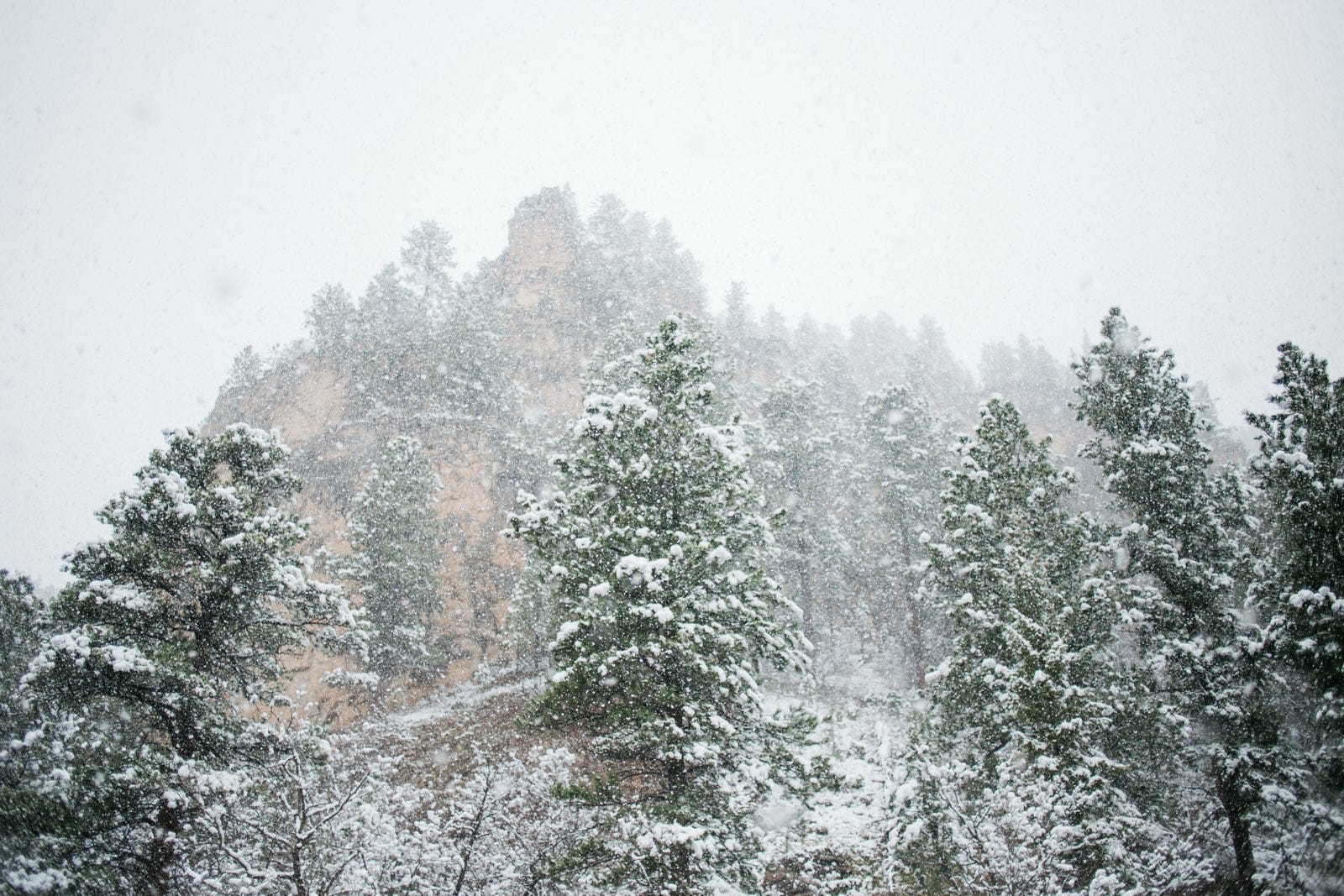
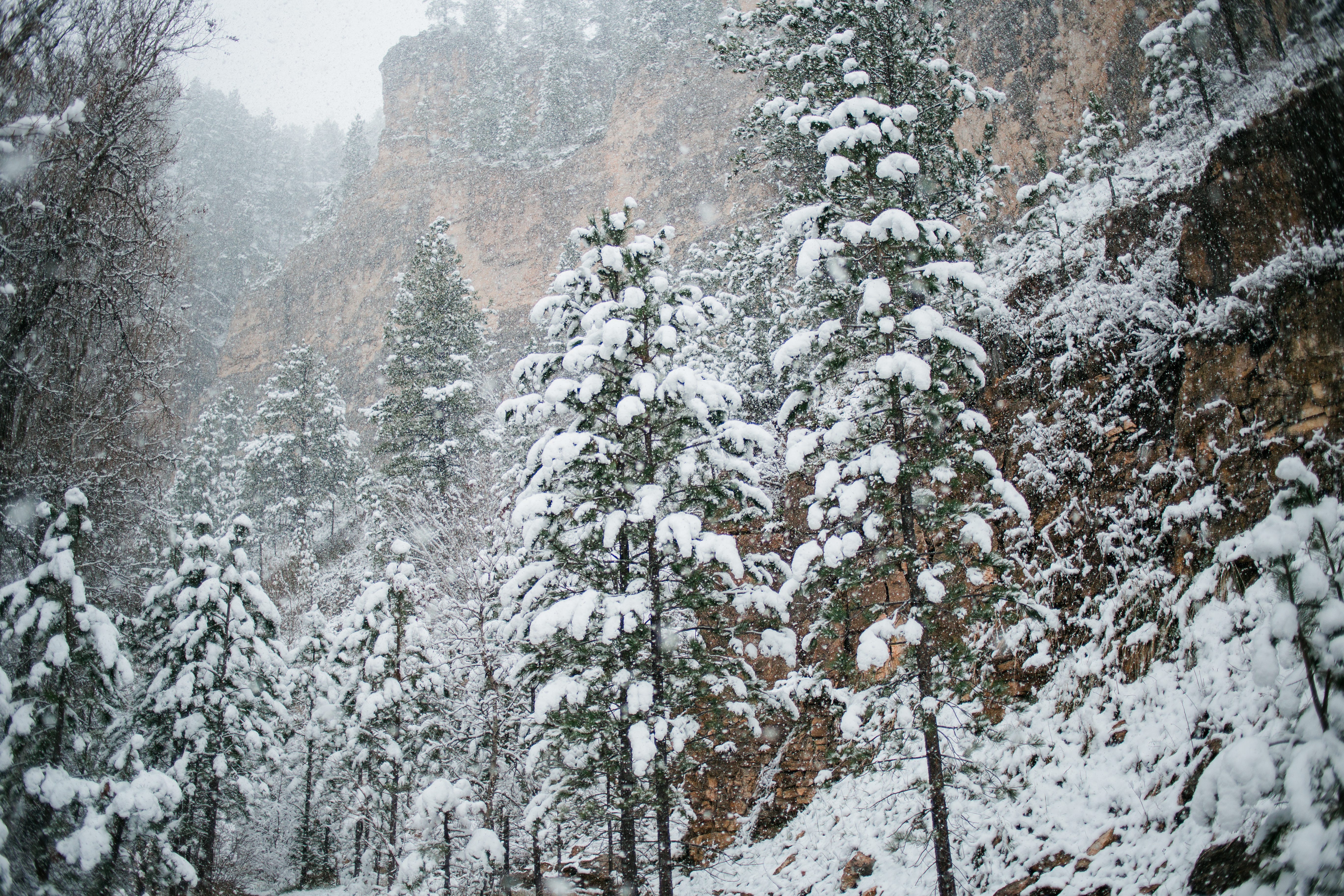
After two sweltering days in the Sandhills/Badlands, I rejoiced when I finally arrived at the evergreen fastness of the Black Hills. The storm had brought a welcome cold front, and I spent the final leg of my trip hiking and bouncing between monuments, cafes, and breweries. (And sleeping on a real bed.)
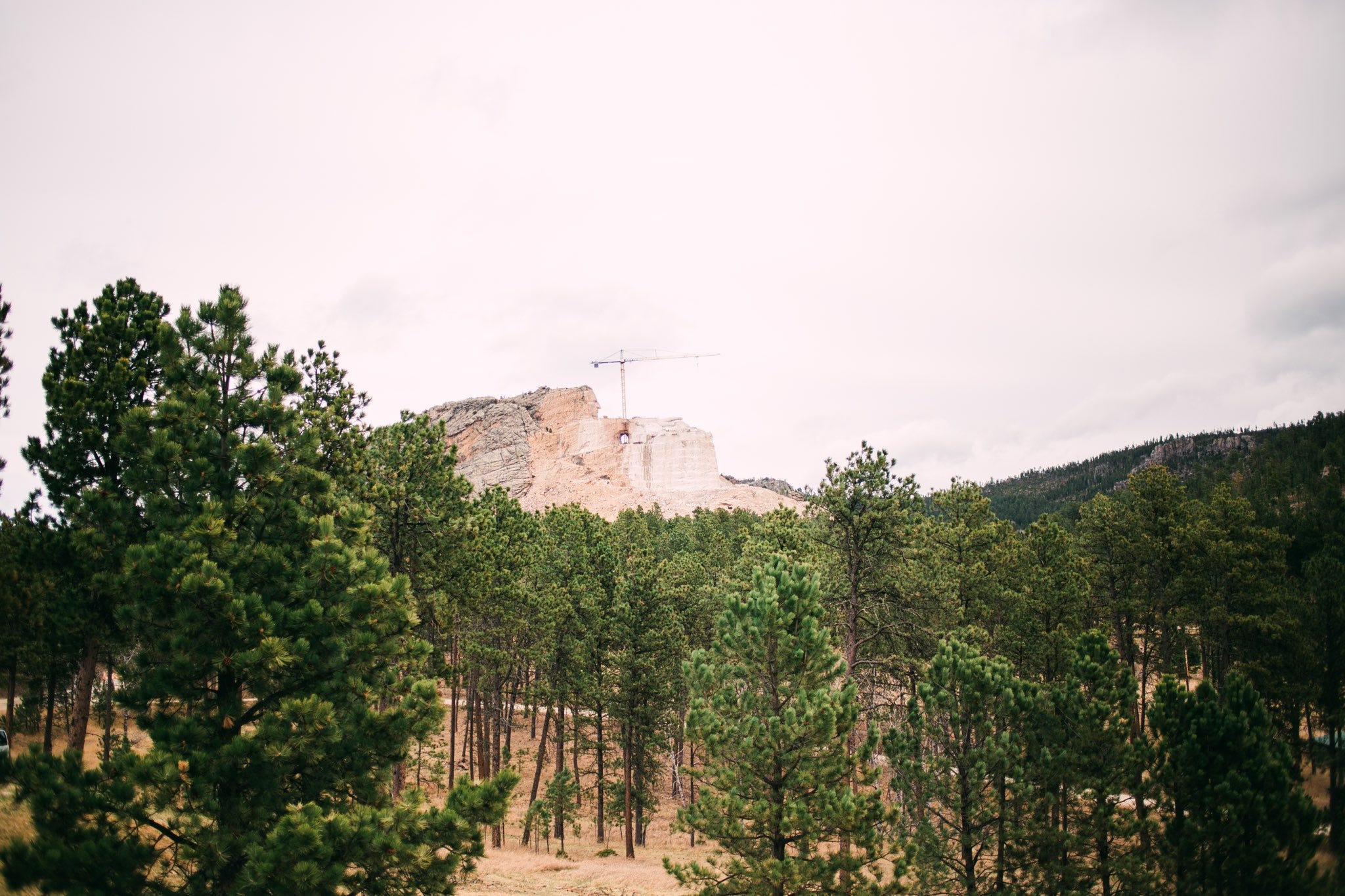
Tip: if you ever find yourself strapped for time while exploring the Black Hills, visit Crazy Horse over Rushmore.
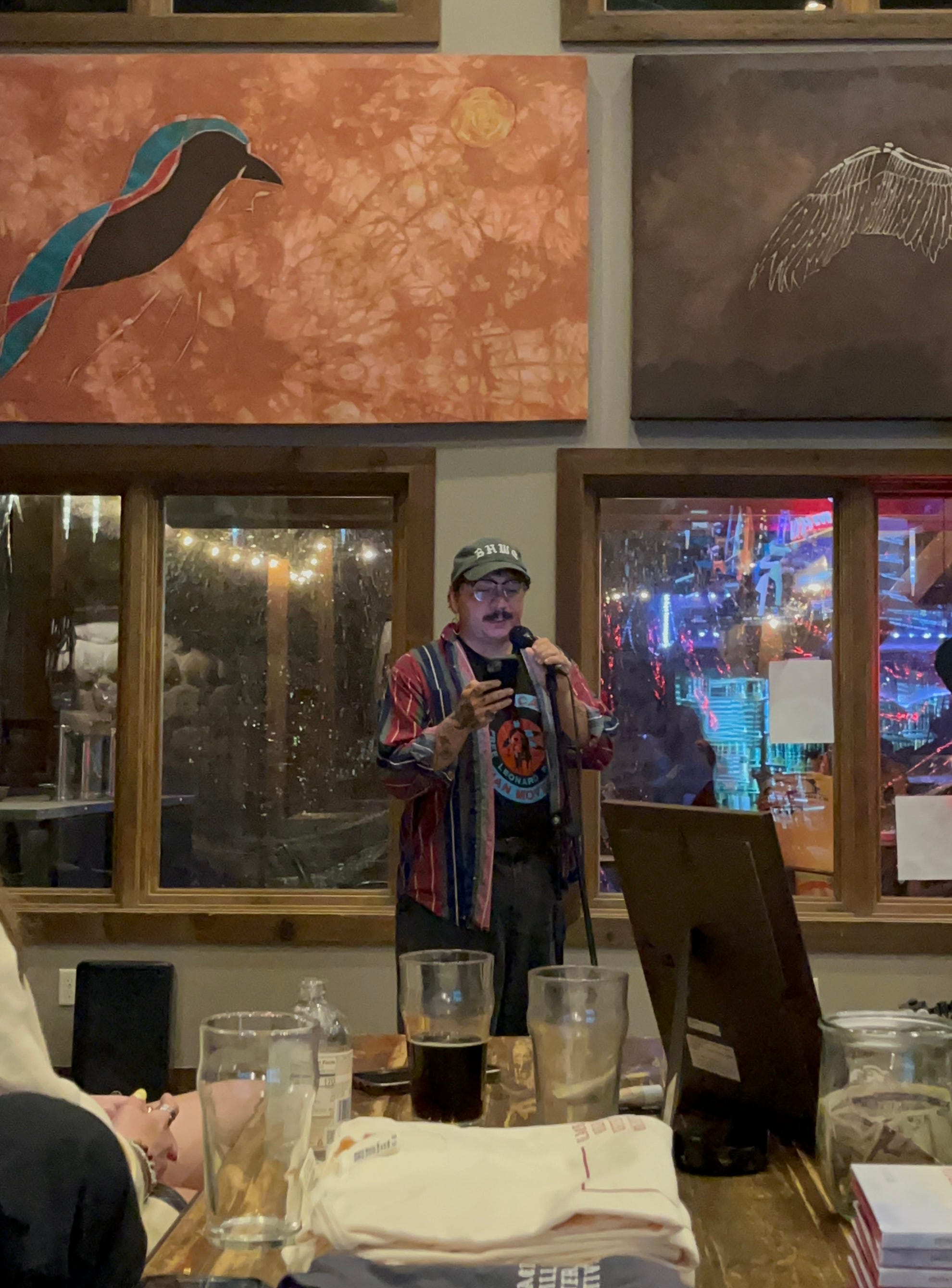
The Black Hills Writers Collective invited me to be the featured author at their April poetry open mic, which took place that Thursday night. It was lovely, and just the right amount of civilization to balance out an otherwise solitary trip.
Several other local poets read, including my old friend Robert Bordeaux. I sold several books and read some new materials. My Airbnb host even attended.
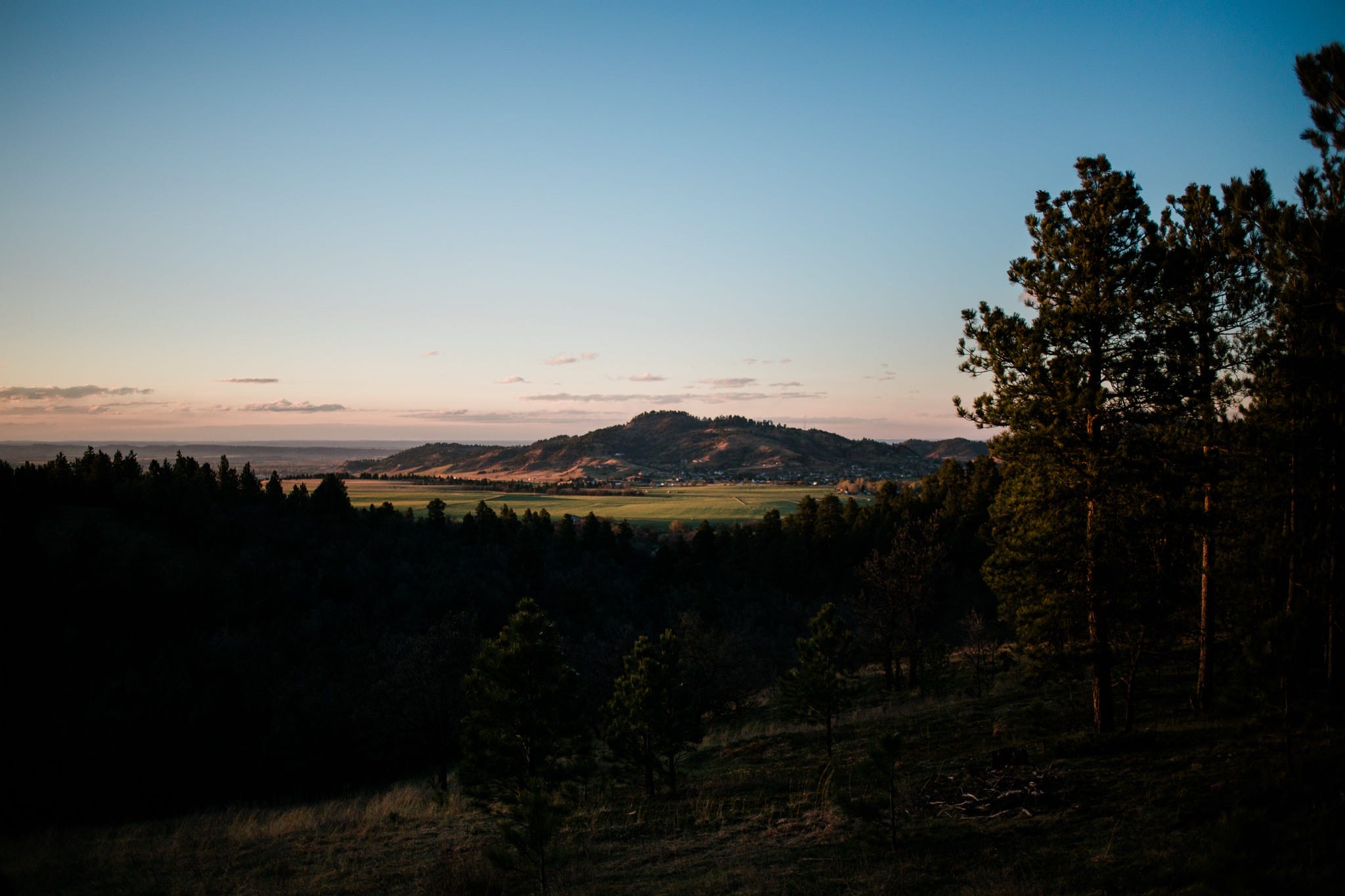
I realize this travelogue is not a typical post for Conversant. For the last couple of years I have been poring over the history of the Great Plains, where I have lived all my life. One reason I took this particular trip was to see with my eyes landscapes, rivers, and memorials I have heretofore only read in books. I hope the images served to draw you toward those places, too.
I have more to write about all of this, but that will come later—and in verse.
Stephen R. Jones has written a beautiful book on the Sandhills, if you’d like to learn more.
Black Elk, The Sacred Pipe: Black Elk's Account of the Seven Rites of the Oglala Sioux, recorded and edited by Joseph Epes Brown (Norman: University of Oklahoma Press, 1953; repr. 1989).
Is the photo from the Valentine area of the Snake or the Niobrara? Did you treat yourself to a steak at the Peppermill? Sometime around my 30th birthday, I ate a 30oz steak there. As Jim Harrison also once said, “only in the Midwest is overeating an act of heroism”.
I loved journeying alongside you, Cameron! My favorite way to see any place is through the eyes of someone who really loves it, and I know how much you love this particular part of the world.